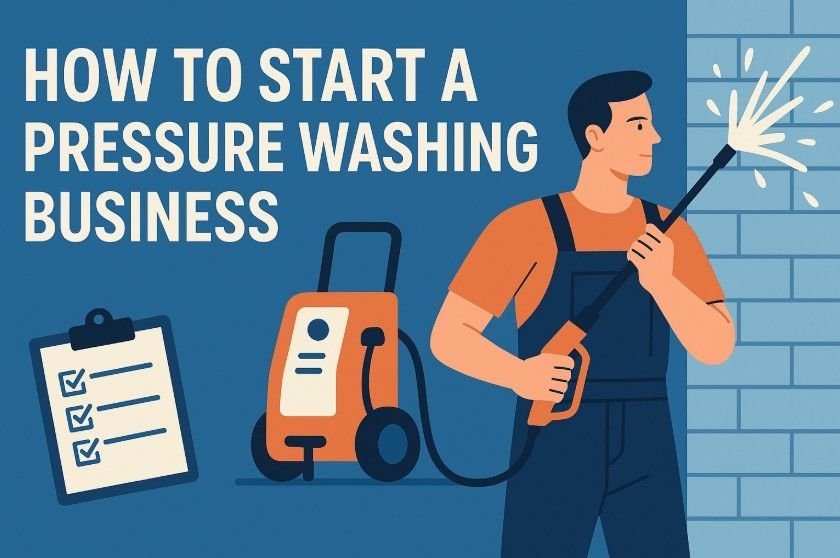
If you’ve been wondering how to start a pressure washing business, you’re looking at one of the most accessible service businesses in the home-services space. Startup costs are relatively low, demand is strong, and you can begin part-time before going all in. But to actually make money—and protect yourself legally—you need more than a pressure washer and a truck.
Below is a clear roadmap based on what top guides, insurers, and industry tools recommend, adapted for the U.S. market.
What Does a Pressure Washing Business Actually Do?
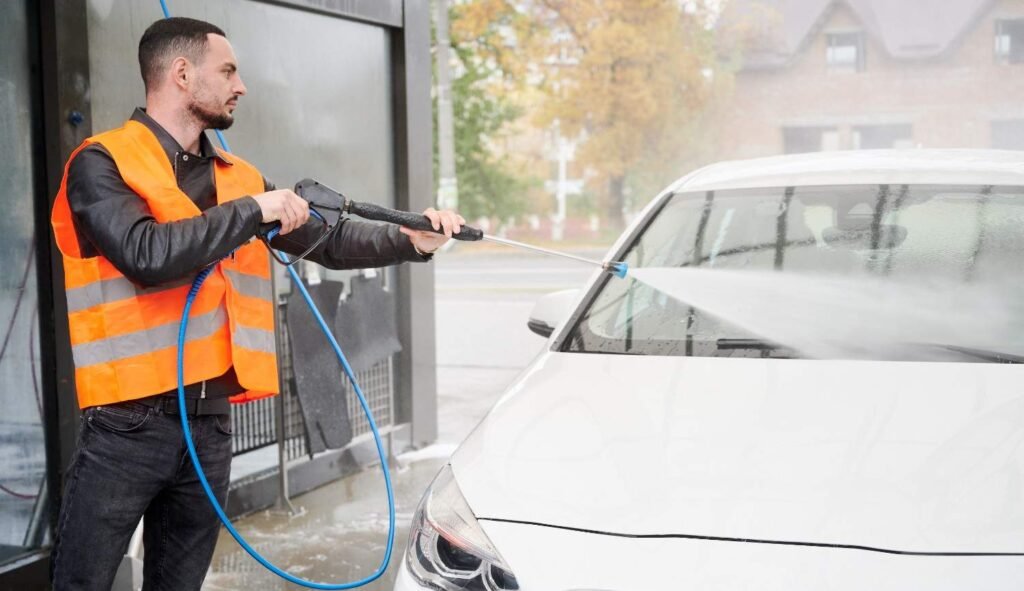
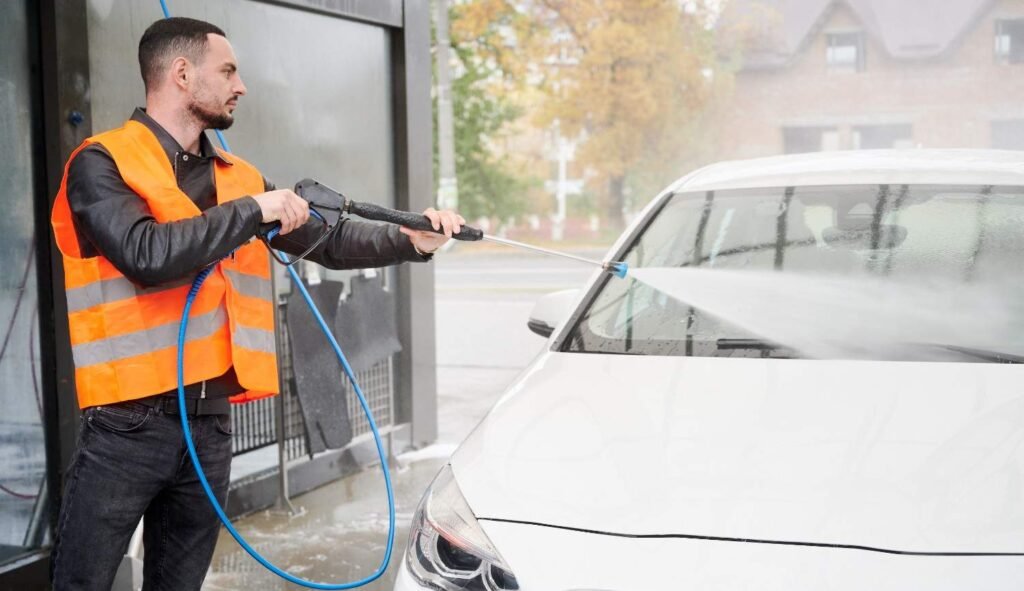
A pressure washing business uses high-powered water sprayers (often with detergents) to clean exterior surfaces like siding, driveways, decks, fences, roofs, parking lots, and sometimes vehicles. Both homeowners and commercial clients hire these services to boost curb appeal, meet safety standards, or prepare surfaces for painting.
Because equipment and overhead are relatively low compared with many trades, this type of business can be profitable once you build a steady client base and keep your schedule full. Many owners start solo and later add crews as demand grows.
How to Start a Pressure Washing Business Step by Step
1. Research Your Local Market and Pick a Niche
Start with basic market research:
- Search Google and local directories for pressure washing companies in your area.
- Note their services (driveways, house washing, roof cleaning, commercial work, fleets, etc.).
- Identify gaps—maybe no one focuses on HOAs, realtors, or small storefronts.
Choosing a niche makes it easier to position your brand and pricing. For example, you might specialize in:
- Residential exteriors and driveways
- “Pre-sale” cleaning for real estate agents
- Small commercial properties and parking lots
2. Write a Simple Business Plan
You don’t need a 40-page document, but you do need clarity. A solid pressure washing business plan usually covers:
- Services offered: Driveways, house washes, decks, fences, roof cleaning, etc.
- Target customers: Homeowners in specific ZIP codes, realtors, property managers, or small businesses.
- Startup budget: Equipment, vehicle, licensing, insurance, marketing, working capital.
- Revenue plan: How many jobs per week you need at an average price to hit your income goals.
A simple spreadsheet for pricing, costs, and income projections helps keep you realistic from day one.
3. Choose a Legal Structure and Handle Registrations
In the U.S., most new owners choose one of these:
- Sole proprietorship: Easiest and cheapest to set up, but no liability protection.
- LLC: Popular choice because it can separate your personal and business assets.
- Corporation: More complex; better for larger operations or specific tax strategies.
Typical next steps:
- Register your business name with your state.
- Apply for an EIN (Employer Identification Number) from the IRS if needed.
- Obtain any local business licenses or permits required in your city or county.
4. Get the Right Insurance and Compliance in Place
Pressure washing involves ladders, powerful water jets, chemicals, and customers’ property—so insurance is non-negotiable. Common coverage includes:
- General liability insurance (for property damage or injuries)
- Commercial auto insurance (for your work vehicle)
- Workers’ compensation (if you hire employees, as required by state law)
- Equipment insurance (for your washer, hoses, and accessories)
Some cities also regulate wastewater discharge, so check local environmental regulations before you start washing large surfaces and letting runoff hit storm drains.
5. Buy Essential Pressure Washing Equipment and Supplies
Top guides recommend starting with professional-grade equipment rather than cheap consumer machines.
Essential items include:
- Commercial pressure washer (gas or electric; 3,000+ PSI is common for pro use)
- Hoses, wands, and interchangeable nozzles
- Surface cleaner for driveways and large flat areas
- Extension wands for siding and higher areas
- Eco-friendly detergents and degreasers
- Safety gear: goggles, gloves, boots, hearing protection
- Reliable vehicle or trailer to transport everything
Startup costs vary widely, but many U.S. guides estimate roughly $5,000–$20,000 for equipment, vehicle, licensing, insurance, and basic marketing to get going.
6. Decide How to Price Your Pressure Washing Services
Pricing must cover your time, chemicals, fuel, insurance, and equipment wear while still remaining competitive. Industry data shows:
- Many jobs fall in the $100–$600 range depending on size and complexity (e.g., driveways, houses, decks).
- Some pros charge per square foot (around $0.15–$0.35+ for typical residential work).
- Others prefer flat rates (e.g., a set price for a standard driveway) or hourly for unknown conditions.
To build your pricing strategy:
- Research local competitors’ prices.
- Calculate your true hourly cost (including travel and setup time).
- Offer tiered packages (basic, standard, premium) rather than random one-off quotes.
7. Set Up Operations, Payments, and Systems
Even a one-person operation benefits from simple systems:
- Use basic invoicing or field-service software to send quotes, schedule jobs, and collect payments.
- Open a business bank account to separate personal and business finances.
- Track expenses and mileage—this matters for taxes.
- Standardize your job process (site walk-through, pre-rinse, chemical application, rinse, post-inspection).
These small steps make you look more professional and make it easier to scale later.
8. Market Your Pressure Washing Business and Get Your First Clients
Top-performing pressure washing guides emphasize local visibility and trust signals.
High-impact tactics include:
- Google Business Profile: Add photos, service area, and collect reviews.
- Simple website or landing page: Show before-and-after photos, services, and a clear “Get a Quote” button.
- Local SEO: Use location-based keywords like “pressure washing in [Your City].”
- Yard signs and vehicle signage: Park where people can see you while you work.
- Flyers or door hangers: Target neighborhoods where you already have jobs for social proof.
- Partnerships: Connect with realtors, property managers, painters, and roofers for referrals.
At the beginning, customer reviews and word-of-mouth will matter more than fancy branding. Show up on time, communicate clearly, and leave jobs cleaner than promised.
Frequently Asked Questions
1. How much does it cost to start a pressure washing business?
Most U.S. estimates suggest around $5,000–$20,000 in startup costs, depending on the quality of your equipment, vehicle, and how aggressively you market. A basic setup with a decent washer, hoses, surface cleaner, chemicals, safety gear, and a used truck or trailer will sit at the lower end. Adding high-end rigs, branding, and paid advertising quickly moves you toward the upper range or beyond.
2. Do I need a license or special certification for a pressure washing business?
You typically need a general business license from your city or county, and in some states you may need additional permits or environmental approvals—especially if you’re working with wastewater or certain chemicals. Certification isn’t mandatory in most places, but safety and equipment training are strongly recommended. Always check with your state and local government websites before taking on paid work.
3. What kind of insurance should a pressure washing business carry?
At minimum, you’ll want general liability insurance to protect against property damage and injuries. If you drive a work vehicle, you likely need commercial auto insurance. Once you hire staff, most states require workers’ compensation coverage. Many owners also insure their equipment because replacing a damaged washer or trailer out of pocket can be expensive.
4. Is a pressure washing business actually profitable?
It can be very profitable if you price correctly, control your costs, and keep your schedule filled. Typical residential jobs can bring in $100–$600 each, and well-run small operations can reach five-figure monthly revenue after building a solid client base. Profitability depends on factors like your market, how efficiently you work, your marketing strategy, and whether you branch into higher-ticket commercial work.
Final Thoughts: Turning Clean Surfaces Into a Real Business
Learning how to start a pressure washing business is really about building a repeatable system: understand your market, choose a niche, set up the right legal and insurance foundation, invest in solid equipment, price jobs confidently, and market where your ideal customers are already looking. With consistent service and smart operations, a simple pressure washer can turn into a reliable, scalable source of income.