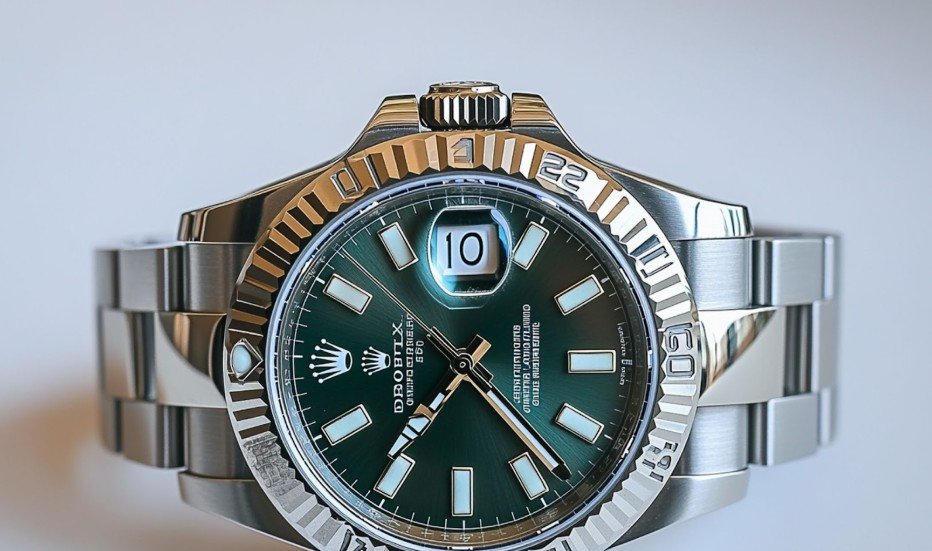
If you’ve ever held a Rolex in your hand and wondered, “Do Rolex watches have batteries?” you’re not alone. Even seasoned collectors ask this when they’re first introduced to the brand. Rolex watches have a mystique to them—heavy, luxurious, precise—and on the surface, it’s not obvious what keeps them running.
As someone who studies timepieces for a living, I can tell you this: almost every Rolex ever made does NOT use a battery. Rolex is a mechanical-first brand, relying on engineering rather than electronics. But there is one historical exception, and it’s actually one of the most interesting corners of Rolex history.
Let’s break it all down in a friendly, simple, and expert way.
Do Rolex Watches Have Batteries?
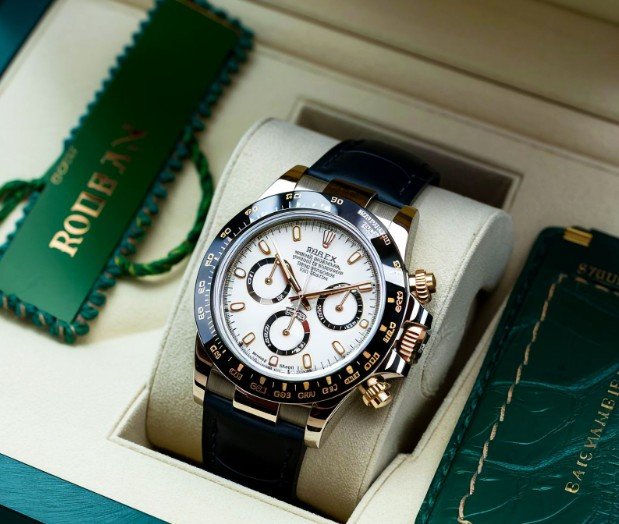
The straight answer is No—modern Rolex watches do not have batteries. Rolex builds its watches with self-winding mechanical movements, also known as automatic movements.
These watches power themselves using your wrist movement. Inside the case sits a Perpetual rotor, a semi-circular weight that swings every time your wrist moves. That motion winds the mainspring, which stores energy and drives the gears and hands.
This is the reason Rolex watches don’t tick per second like cheap quartz watches—they sweep smoothly around the dial.
How Do Rolex Watches Work Without Batteries?
To understand why Rolex doesn’t rely on batteries, it helps to look inside the watch. Rolex movements are essentially mechanical engines—tiny but incredibly precise.
1. The Perpetual Rotor
Rolex’s famous Perpetual rotor is the heart of its automatic movement. It spins as you move, winding the mainspring continuously.
2. The Mainspring
The mainspring stores energy like a tightly wound coil. Once fully wound, it slowly releases power to keep the watch running.
3. The Power Reserve
Most modern Rolex models have a power reserve of 40 to 70 hours, depending on the movement. Some newer calibers even exceed 70 hours.
4. No Electricity Required
Because the entire system is mechanical, there’s no circuitry, no battery cell, and no electronic components inside the watch—only beautifully engineered metal parts working together.
The Only Exception: The Rolex Oysterquartz
While modern Rolex watches are purely mechanical, there was a battery-powered Rolex once: the Oysterquartz.
When Was It Made?
The Oysterquartz was produced between 1977 and 2001, during the global “quartz crisis,” when battery-powered quartz watches became wildly popular.
Why Did Rolex Make It?
Quartz watches offered incredible accuracy and were cheaper to produce. To stay competitive, Rolex designed its own in-house quartz movement—robust, angular, and remarkably precise.
Is It Still Made Today?
No. Rolex discontinued the Oysterquartz in 2001, and it has since become a collector’s favorite due to its rarity and unique design.
Do Oysterquartz Watches Use Batteries?
Yes. They require a battery change about every two years.
Table: Do Rolex Watches Have Batteries?
A quick comparison to make things clear:
| Rolex Category | Battery? | Movement Type | Years Produced | Notable Models |
| Modern Rolex Watches | No | Automatic Self-Winding Mechanical | Ongoing | Submariner, Datejust, Day-Date, GMT-Master II |
| Vintage Mechanical Rolex | No | Manual/Automatic Mechanical | 1900s–Present | Explorer, Sea-Dweller, Daytona |
| Rolex Oysterquartz | Yes | Quartz (Battery-Powered) | 1977–2001 | Oysterquartz Datejust, Oysterquartz Day-Date |
| Counterfeit Rolex | Commonly Yes | Cheap Quartz Battery | Fake | Any model misrepresented as battery-powered |
This table alone helps you spot fakes instantly: a modern Rolex with a battery is almost definitely not real.
How Long Does a Rolex Run Without Wearing It?
Because Rolex watches do not use batteries, their runtime depends entirely on the power reserve.
Most Rolex models last 40 to 70 hours off the wrist. If you stop wearing your watch for a couple of days, it may stop—not because of a dead battery, but because the mainspring unwound.
A few simple wrist movements or manual winding will bring it back to life.
Why Rolex Doesn’t Use Batteries Anymore
Rolex could make quartz watches today, but they consciously choose not to. Here’s why.
1. Prestige and Craftsmanship
Mechanical movements represent Swiss watchmaking at its finest—hundreds of parts working together with no electricity. Rolex places significant value on tradition and engineering.
2. Longevity
A mechanical Rolex can last generations with proper servicing. Quartz models rely on replaceable electronic components, which don’t age as gracefully.
3. Brand Identity
Rolex built its reputation on robust, reliable, mechanical movements. Keeping their watches battery-free reinforces that identity.
How to Tell If Your Rolex Has a Battery
If you’re unsure whether the Rolex you’re examining might have a battery, here’s how you can tell:
1. Look at the Second Hand
- Smooth sweep → mechanical → no battery
- Sharp one-second ticks → likely quartz → check the model
2. Search the Reference Number
A quick search will tell you instantly whether your model is mechanical or an Oysterquartz.
3. Check the Case Back
Modern Rolex watches have solid, sealed backs.
If your watch has:
- a removable back
- visible screws
- a battery hatch
…it’s almost certainly not a genuine Rolex.
How to Maintain a Modern Rolex (Without a Battery)
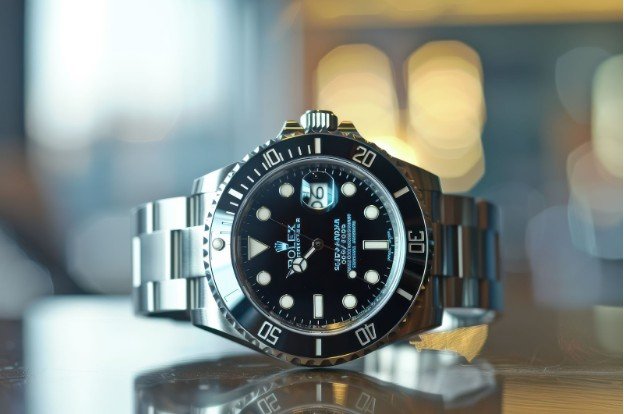
Since there is no battery to worry about, Rolex maintenance is mostly mechanical.
1. Wear It Regularly
Movement keeps it wound naturally.
2. Manually Wind It Occasionally
A Rolex benefits from 20–30 turns of the crown, especially if it hasn’t been worn recently.
3. Service It Every 10 Years
Rolex recommends servicing approximately once a decade for peak performance.
4. Keep It Clean
A quick rinse under lukewarm water (if waterproof) helps remove dirt.
FAQs About Rolex Batteries and Movements
1. Do Rolex watches have batteries at all?
Modern Rolex watches do not use batteries. The only battery-powered Rolex ever made was the Oysterquartz line (1977–2001). If a modern Rolex has a battery, it is almost guaranteed to be counterfeit.
2. Why does my Rolex stop running if it doesn’t have a battery?
Because Rolex watches are mechanical, they stop when the mainspring unwinds. Wearing the watch regularly or manually winding it will restart it. This has nothing to do with batteries.
3. How often do you need to wind a Rolex?
If worn daily, you never need to wind it manually. If not worn, manual winding every few days helps keep the movement lubricated and accurate.
4. Are quartz Rolex watches valuable?
Yes. The Oysterquartz models have become collectors’ items due to their rarity, unique design, and historical significance. Prices have risen steadily in recent years.
Final Thoughts: Do Rolex Watches Have Batteries?
So, do Rolex watches have batteries? For almost every Rolex on the market today, the answer is no. Rolex has built its legacy on exceptional mechanical movements that rely on craftsmanship rather than electronics.
The only exception—the Oysterquartz—is a fascinating chapter of Rolex history, but it remains just that: an exception.
Understanding the difference helps you appreciate what makes a Rolex truly special—and helps you spot a fake from a mile away.