
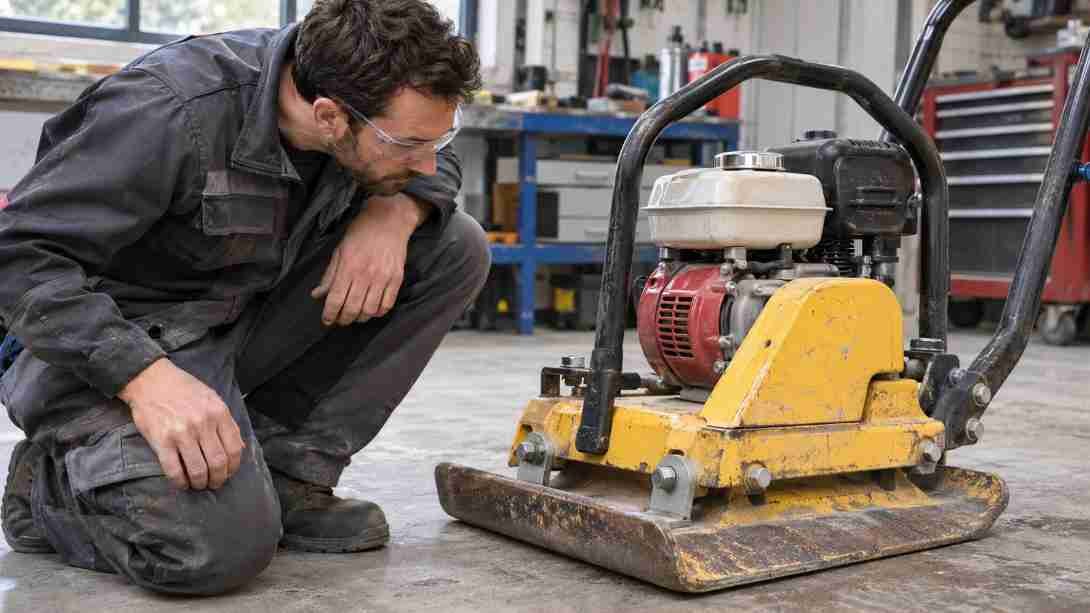
Plate compactors are indispensable tools in the construction industry, particularly when preparing surfaces for paving, roadworks, or landscaping projects. Their role in compacting soil, gravel, and asphalt ensures a stable and durable base for various structural applications.
Understanding Plate Compactors
A plate compactor is a mechanical device designed to compress soil, aggregate, or asphalt by vibrating a heavy, flat plate that moves rapidly up and down. This motion reduces air gaps between particles, increasing density and improving load-bearing capacity.
The compactors come in different sizes and power options, suitable for various job scopes from small landscaping tasks to large-scale construction projects. Choosing the correct model can significantly affect the efficiency and quality of surface preparation.
Types of Plate Compactors
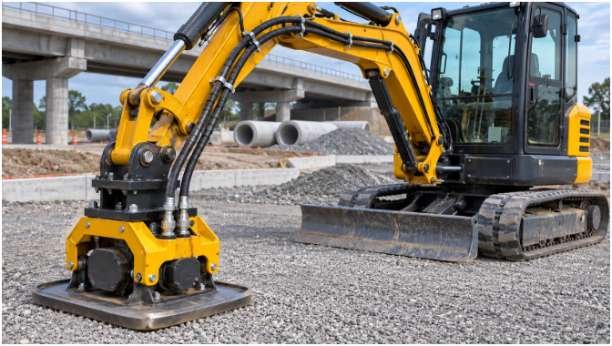
Plate compactors can be categorised based on their power source, vibration mechanism, and plate size. The main types include petrol-powered, electric, and hydraulic compactors.
Petrol-powered compactors are commonly used on sites without electricity access. They provide ample power and flexibility, making them ideal for outdoor use and larger projects.
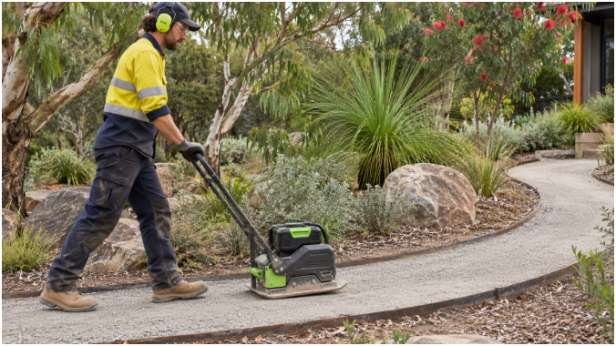
Electric compactors offer quieter operation and zero emissions, which makes them suitable for indoor or environmentally sensitive projects.
Hydraulic compactors are often integrated with larger construction machinery, providing high compaction force for extensive roadwork or infrastructure projects.
Key Components of Plate Compactors
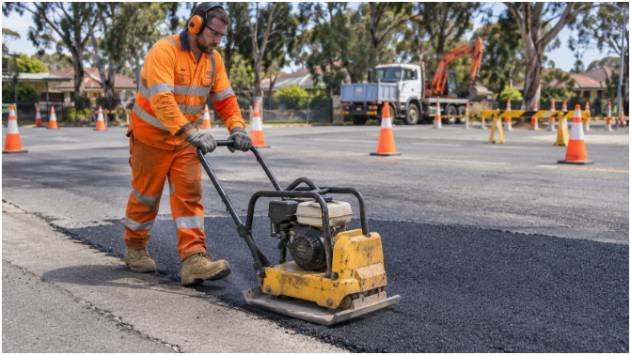
The essential elements of plate compactors include the vibrating plate, engine or motor, centrifugal clutch, excitor mechanism, and the handle assembly.
The vibrating plate is a thick steel plate that directly contacts the ground. Its rapid vibration is what causes the compaction effect.
The engine powers the vibration mechanism and varies in size and type according to the compactor’s design. The centrifugal clutch engages and disengages the excitor to control vibration.
The excitor mechanism generates the vibratory force, transferring energy to the plate to achieve effective compaction.
Handle assemblies are ergonomically designed to provide the operator with control and stability during operation.
Applications of Plate Compactors
Plate compactors are versatile tools utilised across a wide range of construction and landscaping tasks.
One of the common applications is soil compaction prior to the laying of foundations or paving. Compacting soil reduces settling or shifting, preventing future structural problems.
They are also extensively used in the compaction of gravel layers under driveways and walkways to create a firm base.
In road construction, plate compactors assist in compressing asphalt layers, ensuring a smooth and durable surface capable of withstanding traffic loads.
Landscapers use compactors to prepare garden paths and terraces, enhancing both aesthetics and functionality.
Benefits of Using Plate Compactors
Efficient compaction of materials reduces the risk of uneven settlement, soil erosion, and surface degradation. The high-frequency vibrations improve material density, increasing strength and stability.
Plate compactors are also cost-effective, reducing manual labour requirements and completing tasks more rapidly and uniformly than hand tamping methods.
Improved compaction leads to longer-lasting surfaces, lowering maintenance and repair costs over time. This contributes to sustainable construction practices.
Factors to Consider When Choosing a Plate Compactor
Selecting the correct plate compactor depends on project requirements such as material type, compaction depth, area size, and accessibility—key factors in preventing unexpected roadside problems during civil and paving work.
A large plate surface area increases efficiency on flat, spacious terrains but may not suit confined or uneven spaces where smaller or more manoeuvrable compactors are preferable.
Engine power should correspond to the material hardness and project scale. A more powerful machine can handle denser materials but may be excessive for delicate surfaces.
Consider the vibration frequency and amplitude, which influence the compaction force and penetration. These parameters must be matched to the soil or material type for optimal results.
Operator comfort and safety features are important for prolonged use, including vibration dampening handles and emergency stop mechanisms.
Maintenance and Safety
Proper maintenance of plate compactors ensures longevity and reliable performance—much like planning a yard with maintenance in mind prevents costly long-term repairs. Regular inspection of the plate for wear, cleaning of air filters, checking oil levels, and lubricating moving parts are standard practices.
Operators should observe safety guidelines such as wearing protective equipment, ensuring secure footing, and operating the compactor on stable surfaces to prevent accidents.
Following manufacturer instructions for start-up, shut-down, and storage protects both the equipment and the user.
Conclusion
In summary, a plate compactor is a vital tool in construction and landscaping, facilitating the preparation of stable and durable bases. Understanding the types, components, applications, and maintenance of these machines enables contractors and labourers to select and operate them effectively.
For those seeking quality and reliable options, exploring the range of plate compactor models available online provides access to suitable equipment tailored to diverse project needs.
Incorporating plate compactors into construction workflows not only enhances productivity but also contributes to structural integrity and long-term project success.
